



Silica dust exposure is life-threatening.
Exposure is preventable.
You can be safe by following the right safety measures.
How to stay safe
To stay safe, you should follow two steps. The first step is to identify silica dust hazards, and the second step is to manage silica dust risks.
What is silica?
Silica is a type of natural, mineral crystal made of silicon dioxide that is found in rocks, stones, sand, gravel and clay. The most common kind is called quartz.
Silica can also be found in the materials listed in this table:
Material containing silica | % of crystalline silica |
Sand | Over 95% |
Engineered stone products | Up to 92% |
Sandstone | 70 to 90% |
Granite | 25 to 60% |
Ceramic tiles | 5 to 45% |
Autoclaved aerated concrete panels, concrete bricks and pavers | 20 to 40% |
Slate | 20 to 40% |
Fibre-cement sheeting | 5 to 40% |
Concrete | Up to 30% |
Bricks | 5 to 15% |
Marble | Up to 5% |
Regardless of the percentage of silica, the Person Conducting a Business or Undertaking (PCBUs) must implement controls to manage the risks of exposure to silica dust.
How is silica dust made?
Silica-containing materials consist of tiny particles, which can be released into the air when disturbed. The disturbance can be caused by working with them such as when drilling, tunnelling, cutting, grinding or polishing a material, like in the photo below.
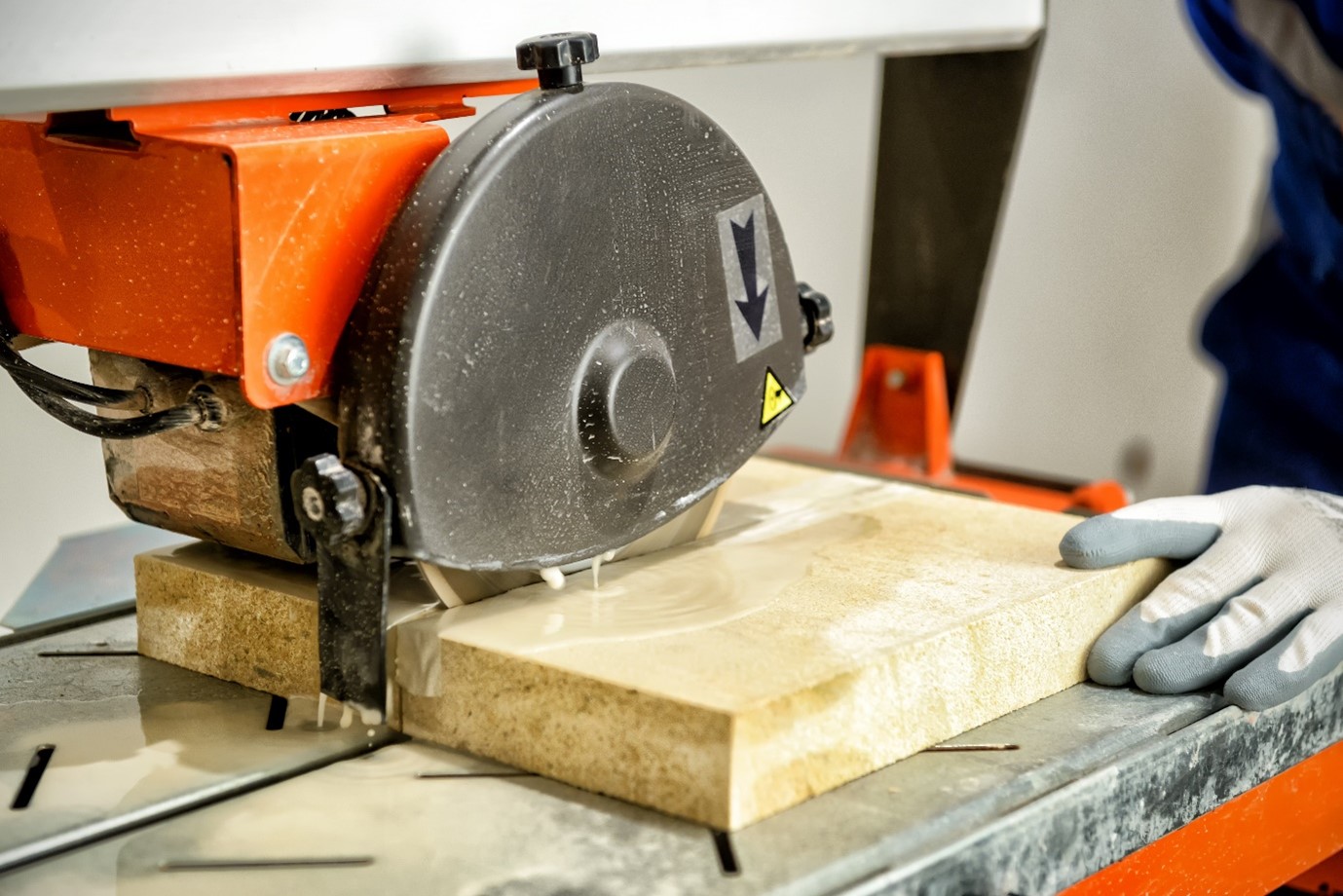
This image shows a worker cutting stone
When you carry out tasks that disturb these materials, tiny particles called silica dust - 100 times smaller than a grain of sand - are released into the air. The air can retain these particles for a long time, and you can breathe them in without realising it. This dust can travel deep into your lungs.

This image shows dust particle sizes (image United States Environmental Protection Agency).
Watch this video from Lung Foundation Australia to find out more about silica dust.
Health risks from breathing silica dust
Silica dust exposure is life-threatening.
Exposure is preventable.
You can be safe by following the right safety measures.
Breathing in silica dust is dangerous. It can harm your lungs, making them scarred and hard for you to breathe. Breathing in silica dust can lead to:
 | Silicosis (when your lungs become scarred, and they do not recover) |  | Chronic bronchitis (when the big airways in your lungs become inflamed) |
 | Emphysema (when the little air sacs in your lungs weaken, and it's hard to breathe) |  | Lung cancer (when cancerous cells grow in your lungs) |
 | Kidney damage (when your kidneys don't function well and can't filter your blood like they should) |  | Autoimmune diseases (when your body's immune system, which is supposed to keep you healthy, starts attacking your organs and tissues) |
Health professionals know that breathing in low levels of silica dust for a long time can lead to disease. Now they also know that even brief exposure can be dangerous. Silica disease doesn't show immediate symptoms when you inhale it, but the harm has already begun.
 Important note:
The Workplace exposure standard for respirable crystalline silica is 0.05 mg/m3 over an eight-hour workday, five days a week. You must not be exposed to levels exceeding 0.05 mg/m3 during your regular eight-hour daily shifts.
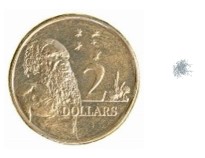
Comparable dust particle sizes per cubic metre of air
Important note:
You might not show signs of a silica-related disease until many years after being exposed. This long wait makes it tough to detect and diagnose early. If you think you could be at risk, talk to your doctor.
Healthy lungs at work quiz
Take Lung Foundation Australia's Healthy Lungs at Work Quiz to understand the types of silica dust risks that may exist in your workplace or to start a conversation with your doctor.
Go to Lung Foundation Australia's website for more information on symptoms, diagnosis and treatment options.
How to stay safe
To stay safe, you should follow two steps. The first step is to identify silica dust hazards, and the second step is to manage silica dust risks.
Step 1: Identify silica dust hazards
You could breathe in silica dust if you:
- cut, drill, saw, rip up, or chase into bitumen, concrete and brickwork
- angle grind, jackhammer, scabble, chisel or spray concrete (shotcrete)
- mix cement, mortar, floor ardit or plaster
- cut in or chase new services into concrete slabs or walls
- dig out sites or demolish buildings with silica-containing stone, sandstone, clay or granite
- blast, dig out, drill, cut, or tunnel into sandstone, clay or granite
- use a power tool to cut or change engineered stone
- cut, grind, or drill bricks, autoclaved aerated concrete, pavers or tiles
- pull apart equipment or get rid of offcuts covered in silica dust
- do cleaning jobs like dry sweeping, changing filters or dust collection bags
- remove work clothes and personal protective equipment (PPE) after working with silica-containing materials
- work in an area close to someone doing these tasks.
To ensure your safety, you should know what materials are being worked with at your site, whether natural or man-made.
Important note:
If you work in construction, read the safety data sheet (SDS) for the materials you work with. Check if the components listed include quartz, cristobalite, or crystalline silica. Some silica-containing products do not require a SDS, but you may find information on a label warning of silica content, or in the product information sheet, or on the manufacturer’s website.
If you are generating silica dust from natural sources like tunnelling, excavating or drilling, find out more about the likelihood of silica dust being present. Consider obtaining a mineralogical report for more information.
Everyone at work should take responsibility for both physical and psychological health and safety:
Person conducting a business or undertaking (PCBU)/employer):
- ensure the health and safety of workers while working
- prevent harm to others while work is being carried out
- eliminate or minimise risks from crystalline silica exposure, as far as reasonably practicable
If the project costs $250,000 or more, additional duties for safety management plans and risk management apply. You must ensure you comply with these.
This is also applicable to all principals, sub-contractors, labour hire and multiple PCBUs conducting the work.
Officers (such as company directors):
- ensure the PCBU complies with work health and safety laws
- ensure the PCBU has access to and uses appropriate resources
- identify crystalline silica hazards
- control crystalline silica risks
- conduct air monitoring
- provide health monitoring results for workers.
Principal contractors (who are considered a PCBU):
All the duties of a PCBU (outlined above) apply to principal contractors:
- ensure the health and safety of workers while working
- prevent harm to others while work is being carried out
- eliminate or minimise risks from crystalline silica exposure, as far as reasonably practicable
If the project costs $250,000 or more, additional duties for safety management plans and risk management apply. You must ensure you comply with these.
Designers, manufacturers, importers, suppliers, installers, commissioners:
- ensure products provided pose no risk, as far as reasonably practicable
- conduct necessary testing for crystalline silica
- provide adequate safety information about your product
- ensure adequate information about safety equipment is available.
Workers:
- take care of your own health and safety
- avoid actions that may harm others
- comply with the instructions given by the PCBU, as far as reasonably practicable
- participate in health monitoring
- use personal protective equipment (PPE)
- report safety incidents.
If workers refuse to follow these instructions, they must be removed from exposure to the source of the risk (for example, working with crystalline silica products).
Others (such as visitors):
- take care of your own health and safety
- comply with the instructions given by the PCBU, as far as reasonably practicable.
Step 2: Manage silica dust risks
PCBUs have a duty of care to keep workers and others safe. The Workplace exposure standard for respirable crystalline silica does not define a clear boundary between safe and unsafe conditions. Instead, it serves as a tool to assess the effectiveness of control measures. For instance, it helps workers understand what should be happening.
Important note:
The Workplace exposure standard for respirable crystalline silica is 0.05 mg/m3 over an eight-hour workday, five days a week. You must not be exposed to levels exceeding 0.05 mg/m3 during your regular eight-hour daily shifts.
Health and air monitoring
PCBUs must arrange and cover the cost of health checks for workers who face a significant risk of being exposed to silica dust. The level of risk is identified by monitoring the air.
The image below provides an overview of the main tasks involved in health and air monitoring. For more detailed information specific to your industry, consult WorkSafe Tasmania's guidance notes or Safe Work Australia's information on health monitoring for crystalline silica.
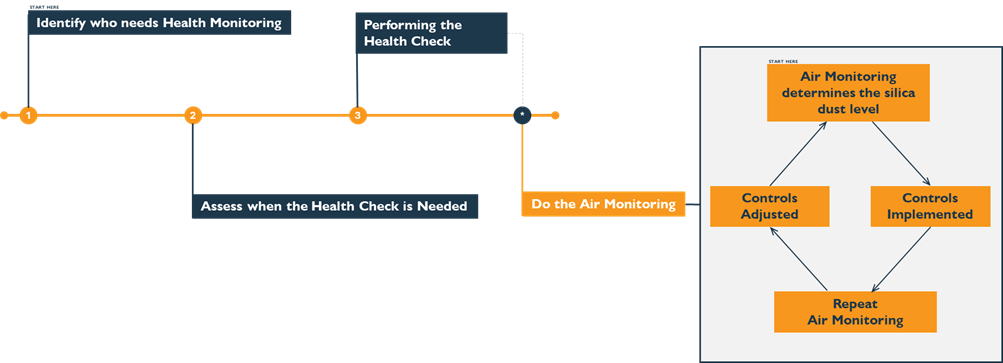
Timeline of health and air monitoring activities for PCBUs
Implementing the hierarchy of controls
Using the hierarchy of controls can reduce the risk of silica dust exposure. The image below (from Lung Foundation Australia) shows the type of controls used, from the most effective through to the least effective methods.

Lung Foundation Australia has a video explaining the hierarchy of controls for silica.
The best approach for the most protection is using a combination of controls, such as the I-SEE mix of control methods.

FAQs
Customers ask us to repair minor chips to their engineered stone benchtops. What must we do?
You are permitted to repair minor chips to engineered stone benchtops (containing 1% or more crystalline silica) that are already installed. For example, filling a crack with liquid resin and using power tools to level and re-polish the surface.
If you need to process the benchtop for the repair work — for example, cutting, grinding, trimming, sanding, abrasive polishing or drilling the stone —you must notify WorkSafe Tasmania before doing so and ensure any processing of the engineered stone is controlled.
To notify WorkSafe you must use the online form on our website.
A kitchen benchtop needs to be pulled out and disposed of — can this be done?
You are permitted to dispose of installed and uninstalled engineered stone benchtops, provided any processing is controlled and WorkSafe Tasmania is notified.
Processing of engineered stone for disposal (for example, using power tools to remove an engineered stone benchtop or crushing engineered stone off-cuts) must be controlled and the disposal must comply with Tasmanian waste management requirements.
If you carry out work involving processing of engineered stone for disposal you must notify WorkSafe Tasmania using the online form on our website.
What happens if I buy a secondhand engineered stone benchtop privately (for example, online) from another person, and it needs work done to it?
You are only permitted to cut or modify second-hand engineered stone benchtops (containing 1% or more crystalline silica) for customers if they entered a building contract before 31 December 2023.
The builder or customer must provide reasonable evidence that the contract specified the use of engineered stone (containing 1% or more crystalline silica) in the design. An email from a builder confirming this specification in the contract serves as reasonable evidence, ensuring it is the builder’s responsibility to validate their claim if investigated.
All related work, including cutting and installation, must be completed by 31 December 2024.
After 31 December 2024 you are not permitted to process engineered stone benchtops (containing 1% or more crystalline silica) at your workshop other than for the purpose of disposal.
I’ve been told that all repair or modification work to engineered stone has to be done on site (for example, in the customer’s house). Is this right?
You are only permitted to undertake repair or minor-modification work to engineered stone (containing 1% or more crystalline silica) that is already installed, and the work must be done at customer’s house.
Processing of engineered stone for repair or minor modification must be controlled and you must notify WorkSafe Tasmania using the online form on our website.
The repair needed to a customer’s engineered stone benchtop means we need to remove it and take it to our workshops to work on. Can we do this?
You are only permitted to undertake repair or minor-modification work to engineered stone that is already installed, and the work must be done at the customer’s house. If an engineered stone benchtop needs removing (uninstalling), it can only be further processed for the purpose of disposal.
Processing of engineered stone for repair, minor modification or disposal must be controlled and you must notify WorkSafe Tasmania using the online form on our website.
A customer wants to buys an offcut of engineered stone and wants us to cut it before 31 December 2024 — can this be done?
You are not permitted to sell or supply engineered stone offcuts (containing 1% or more crystalline silica) to customers unless they entered a building contract before 31 December 2023 that specifies the use of engineered stone in the building design. All related work, including cutting and installation, must be completed by December 31, 2024.
Can we sell engineered stone off cuts ‘as is’ — without cutting them to size for customers — for their own use?
You are not permitted to sell or supply engineered stone (containing 1% or more crystalline silica) to customers for their own use. It’s important to discourage the general public from DIY projects with engineered stone.
Can we sell or give away leftover engineered stone?
You are not permitted to sell or give away leftover engineered stone (containing 1% or more crystalline silica) to customers unless they entered a building contract before 31 December 2023 that specifies the use of engineered stone in the building design.
After 31 December 2024 you are not permitted to sell or supply engineered stone (containing 1% or more crystalline silica) under any circumstances.
Are customers allowed to bring to our factory their own pieces of engineered stone that they already have for us to cut holes or cut down in size for them, before 31 December 2024 and after?
Before 31 December 2024, you are only permitted to cut, or process engineered stone (containing 1% or more crystalline silica) at your factory if your customer entered a building contract before 31 December 2023 that specifies the use of engineered stone in the building design.
After 31 December 2024 you are not permitted to process engineered stone (containing 1% or more crystalline silica) other than for the purpose of disposal.
We’ve had a builder buy multiple off-cuts for his future developments. Are we still allowed to cut the stone before and after 31 December 2024 ?
You are permitted to cut engineered stone (containing 1% or more crystalline silica) for the builder if they entered a building contract before 31 December 2023 that specifies the use of engineered stone in the building design. All related work, including cutting and installation, must be completed by December 31, 2024.
After 31 December 2024 you are not permitted to process engineered stone (containing 1% or more crystalline silica) at your factory under any circumstances other than processing for the purpose of disposal.
If an engineered stone benchtop, that is already in a customer’s house, requires cutting/modification works after 31 December 2024 — can this be done? For example, cutting an existing hot plate or sink cut-out to be larger because the homeowner is replacing appliances or sinks.
No:
You are permitted to carry out work that involves minor modifications to engineered stone benchtops that are previously installed provided the processing is controlled and you give notice to WorkSafe Tasmania using our online form.
Making a minor modification to an installed engineered stone product involves a change or alteration to the product that is limited in scope and where the relevant features and purpose of the product remain. For example, drilling a larger diameter hole in a kitchen benchtop to allow the installation of a new mixer tap would be a minor modification. Making a minor modification does not include cutting a new hole for a sink or stove – these types of modifications are not minor and therefore not permitted.
The work you describe is considered to be a substantial modification to the benchtop and is therefore prohibited.
A customer wants us to cut some low silica stone. We’ve told them that we need a copy of the contract showing it was entered into before 31 December 2023. The builder has since sent us an email confirming the contract was entered into last year, but hasn’t actually supplied a copy of the contract. I assume this is not sufficient?
You are permitted to cut low-silica stone (containing 1% or more crystalline silica) for builders or customers if they entered a building contract before 31 December 2023.
The builder or customer must provide reasonable evidence that the contract specified the use of engineered stone containing 1% or more crystalline silica in the design. An email from a builder confirming this specification in the contract serves as reasonable evidence, ensuring it is the builder’s responsibility to validate their claim if investigated. All related work, including cutting and installation, must be completed by December 31, 2024.
After 31 December 2024, you are prohibited to sell or supply engineered stone benchtops (containing 1% or more crystalline silica) under any circumstances.
We installed an engineered stone benchtop for a customer a couple of years ago. The benchtop has cracked and needs to be replaced. We have an off cut of the low silica stone in the same finish (which is now a discontinued colour and product). Does this fall under legacy work? Can we replace this benchtop for the customer using the off cut we have?
You are not permitted to process offcuts for the purpose of repairing a benchtop that needs replacing. If an engineered stone benchtop needs replacing (uninstalling), it can only be further processed for the purpose of disposal. Additionally, uninstalled stock and offcuts may only be processed for the purposes of disposal.
You are permitted to repair engineered stone benchtops (containing 1% or more crystalline silica), but only for minor work. For example, filling a crack with liquid resin and using power tools to level and re-polish the surface.
If you need to process the benchtop for the repair work — for example, cutting, grinding, trimming, sanding, abrasive polishing or drilling the stone —you must notify WorkSafe Tasmania before doing so and must ensure any processing of the engineered stone is controlled.
To notify WorkSafe you must use the online form on our website.
HIA Training
The Managing the Silica Risk training, accessible from the link below, has been developed by HIA (Housing Industry Association). This training will help participants to understand how they can identify and minimise the risks of silica exposure, helping to keep workers safe. The course is relevant for; builders; business partners and business owners; trade contractors; and industry participants wanting to understand more about silica awareness. Participants who are working in mining, quarrying and/or silica flour processing may require additional training with specific relevance to these areas.
Silica Awareness | HIA Learning
Resources
Silica dust has no obvious signs flyer (PDF, 1.8 MB)
For detailed information specific to your industry:

Managing silica at construction sites guidance note
This guidance note includes advice about silica containing materials and products, and how to control the risks when silica dust is generated from working with them.

Managing silica at quarry and mining sites guidance note
This guidance note includes advice about silica containing materials and products, and how to control the risks when silica dust is generated from working with them.